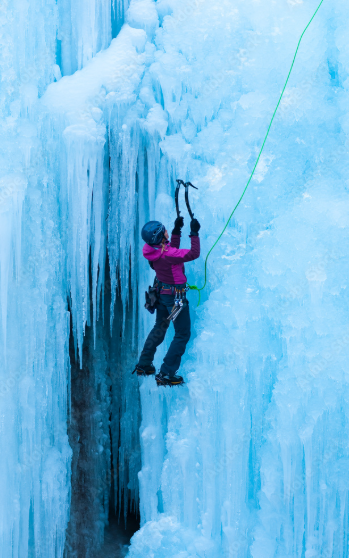
Ice climbing has evolved from a necessary mountaineering skill into a standalone extreme adventure sport.
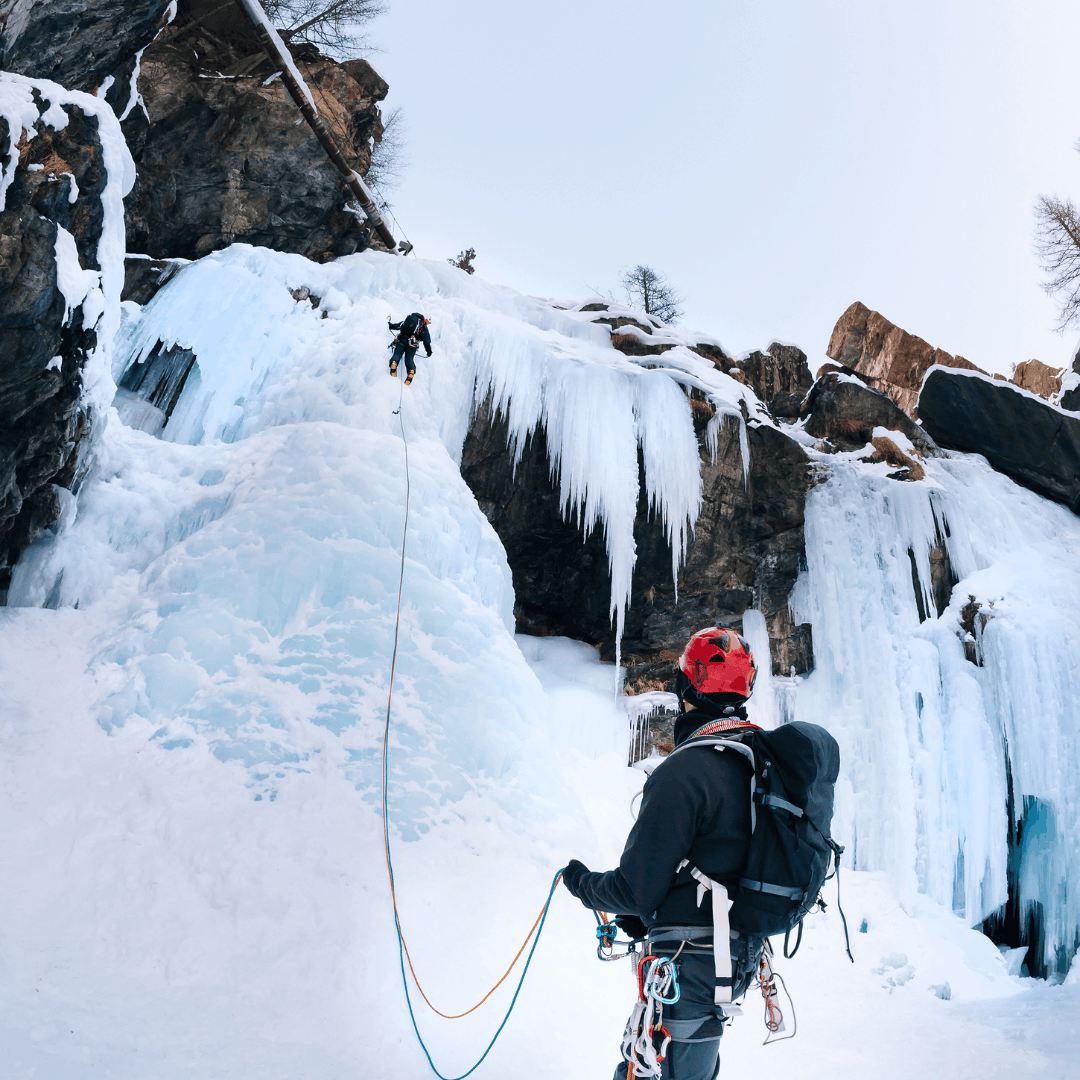
While it remains a critical component for conquering technical alpine summits, it is also accessible as a distinct activity that can be practised with high levels of safety, particularly through guided sessions and top-roping techniques.
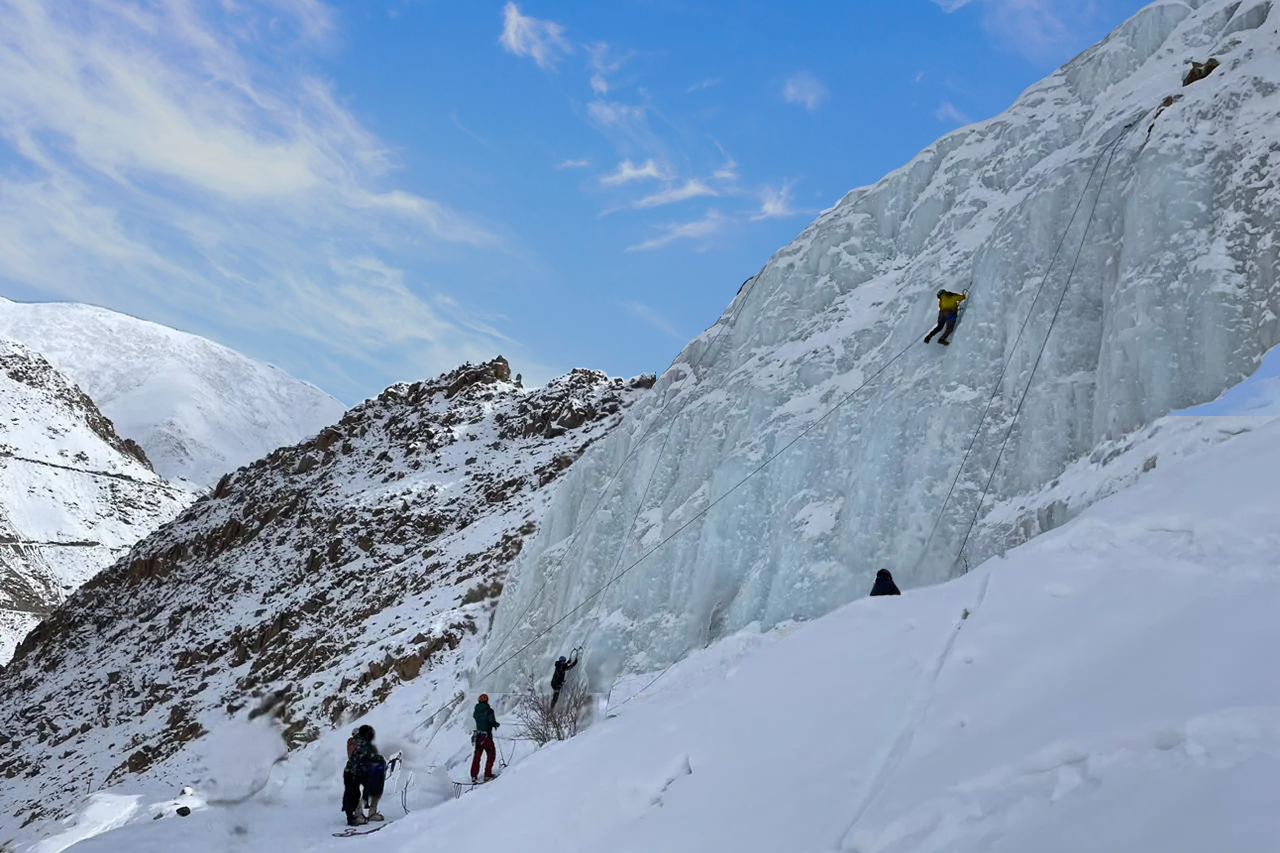
Tracing its origins to the icier traverses of alpine mountaineering, ice climbing has become increasingly popular as its own standalone sport. Now, it’s pursued not only up in the remote glacier-swaddled heights but also in easily accessible high altitude villages with extreme winters.
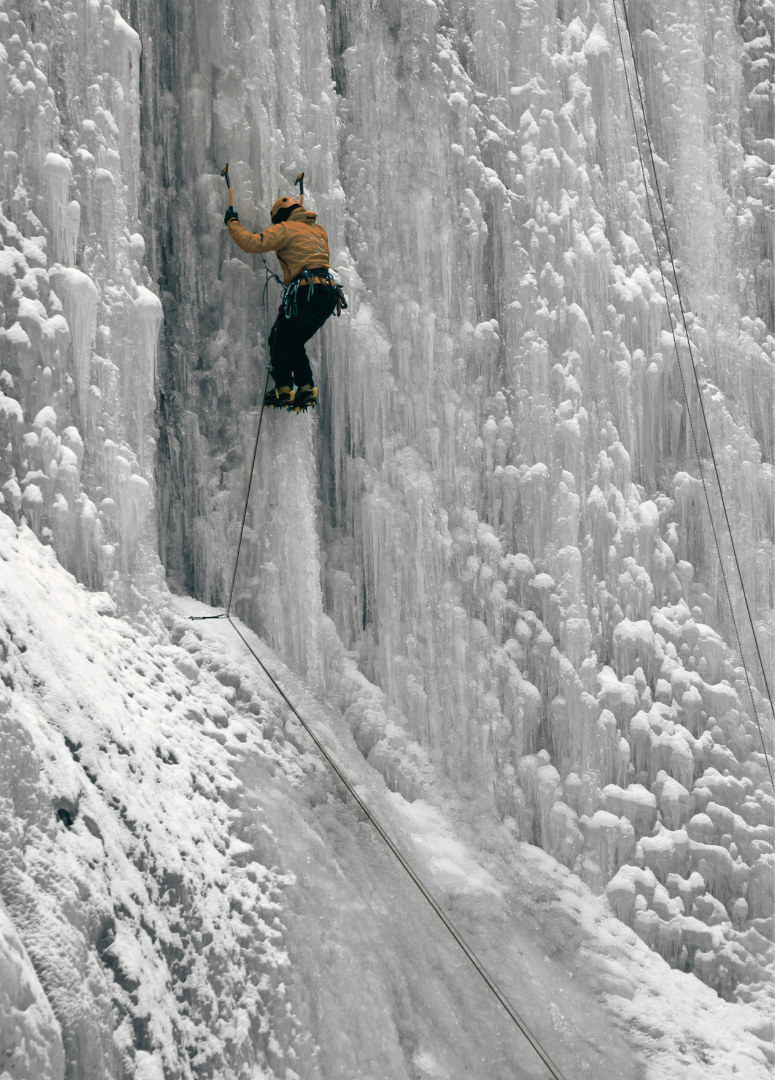
No question, the activity can seem mighty intimidating to a newbie, ice climbing on vertical or even overhanging frozen waterfalls and cliff faces. However, just about anybody of a certain level of physical fitness can dabble in ice climbing, so long as they have the right gear—and the right teacher. I
t’s actually easier than it looks.
And the enticements are real! Ice climbing gives rock climbers a whole new playground during the winter, and meanwhile the up-close-and-personal scaling of sometimes spectacularly sculptured frozen faces offers its own completely singular experience.
Completing this course will help you:
Gain technical proficiency and safety knowledge about the outdoors and frozen objectives
Learn the sport of Ice climbing
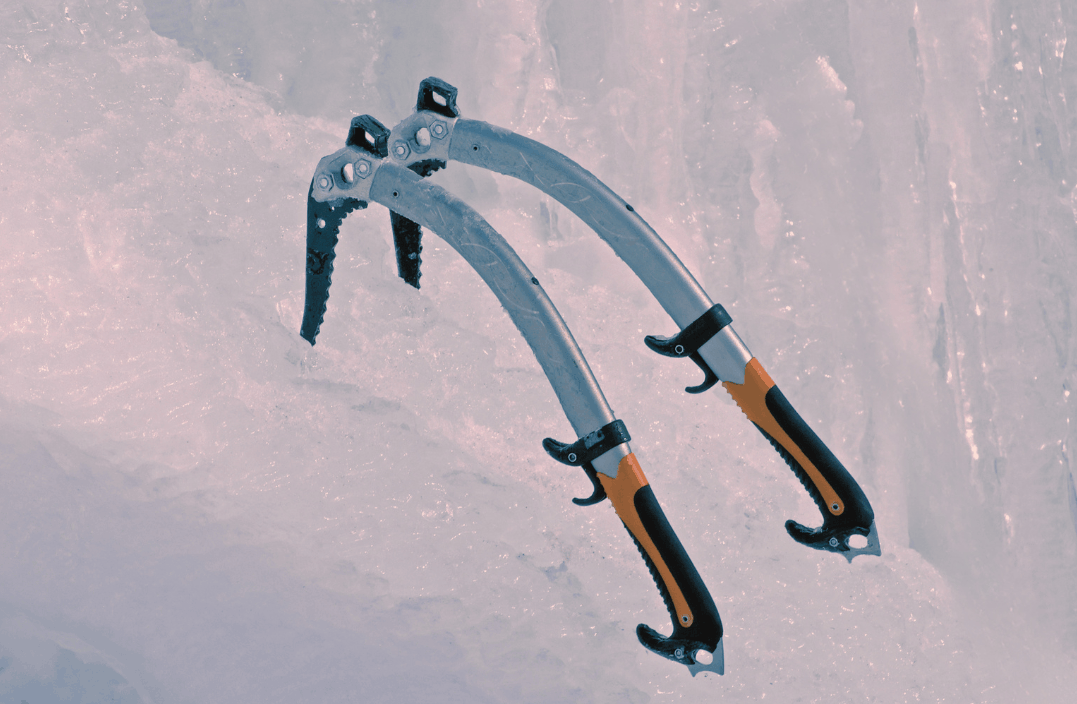
Develop core skills and techniques such as understanding technical equipment, climbing mechanics and rope systems
Safety and Expedition readiness by understanding the concepts of Hazard assessment and emergency preparedness
Alpine progression - Build foundational competence required to conquer technical objectives in high altitude environments
Anybody can climb
All you need is moderate fitness and mobility
For beginners, the primary ice climbing grades to focus on are WI1 and WI2 [Winter ice grade 1 & 2 ], which serve as the foundational steps for learning technique and safety. WI1 is defined as low-angle ice (typically 40–50 degrees) where no ice tools are required, allowing climbers to practice basic crampon use and balance on gentle frozen slopes.
WI2 introduces moderate, consistent ice at approximately 60 degrees with possible bulges, requiring ice tools for some sections but offering good protection and anchor opportunities.
These grades are critical for developing the specific movements of ice climbing, such as front-pointing (kicking the front teeth of crampons into the ice) and tool placement.
WI2 is often cited as the ideal grade for warm-ups or initial learning because it is steep enough to require proper technical form but simple enough to minimize fall risk. As skills advance, climbers progress to WI3 (sustained 70-degree ice with technical rests) and WI4 (continuous 80-degree or vertical ice), which mark the threshold of serious technical ice climbing.
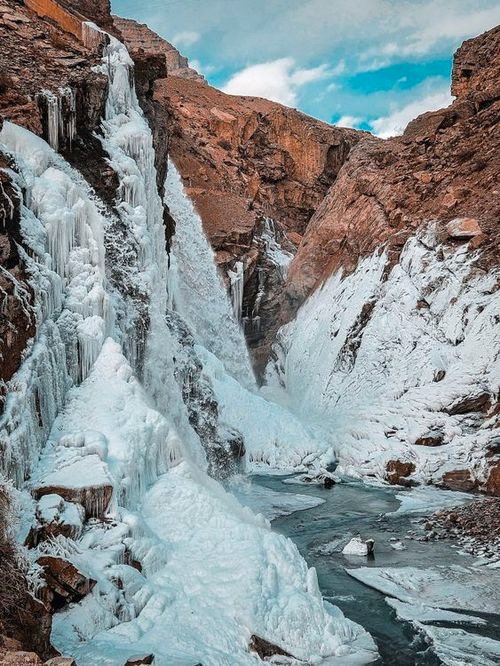
Get a chance to experience the winter wonderland in sub zero temperatures of Ladakh, Lahaul and Spiti
Lahaul being the easiest accessible option in winters through Atal tunnel from Manali
Spiti offers an added exhilarating 4×4 roadtrip experience
Ladakh offers airport acessibility
All three locations offer unique geography, cultural experiences and architecture, local food, beautiful landscape and spiritual heritage